









A small kitchen can be comfortable, efficient, and enjoyable to use when every tool has a clear purpose. Instead of filling cabinets with single-use gadgets, focus on versatile equipment that helps with several cooking tasks. The right tools can make meal preparation easier while keeping counters and storage areas tidy.
This guide covers the essential tools for a small kitchen, along with tips for choosing, storing, and using them effectively.
Start With Versatile Basics
The best tools for a compact kitchen are useful in more than one way. A chef’s knife, for example, can chop vegetables, slice meat, and prepare herbs. A sturdy skillet can fry, sauté, sear, and even bake some dishes.
Before buying anything, consider how often you cook and what types of meals you usually prepare. A small collection of reliable tools is more useful than a large set of items that rarely leave the drawer.
Chef’s Knife
A quality chef’s knife is one of the most useful tools in any kitchen. Choose a comfortable knife with a blade length that feels easy to control, usually between 6 and 8 inches.
Use it for:
– Chopping vegetables
– Slicing fruit and meat
– Mincing herbs
– Cutting larger ingredients into smaller pieces
Keep the knife sharp and store it safely in a knife block, magnetic strip, or blade guard. A sharp knife is generally easier to control than a dull one, but always use a stable cutting board and careful technique.
Cutting Board
A medium-sized cutting board offers enough space for most daily tasks without taking over a small counter. Look for a board that is easy to clean and light enough to move when needed.
A board with a groove around the edge can help collect juices from tomatoes, citrus, or cooked meat. If possible, use separate boards for raw foods and ready-to-eat ingredients to make cleanup and food preparation simpler.
Measuring Tools
Measuring cups and spoons are useful for recipes, baking, sauces, and portioning ingredients. A compact set that nests together can save valuable drawer space.
A liquid measuring cup is also helpful for water, milk, broth, and oil. Choose one with clear markings and a handle that is comfortable to hold.
Choose Cookware That Works Hard
Cookware takes up a significant amount of space, so select pieces that can handle several types of meals. You may not need a large collection of pots and pans.
One Reliable Skillet
A 10- or 12-inch skillet is a practical choice for many small kitchens. It can be used to cook eggs, vegetables, grilled sandwiches, stir-fries, fish, and one-pan meals.
Stainless steel, cast iron, and nonstick skillets each have different features. Stainless steel is durable and useful for browning. Cast iron holds heat well and can move from the stovetop to the oven, although it is heavier. Nonstick cookware is convenient for delicate foods and easy cleanup.
Choose the material that matches your cooking habits rather than buying several styles at once.
A Medium Saucepan
A medium saucepan is useful for cooking grains, pasta, soup, oatmeal, and sauces. A size of about 2 to 3 quarts is often suitable for everyday meals in a small household.
A lid helps retain heat and allows the pan to handle more tasks. If cabinet space is limited, look for cookware with a flat lid or a handle designed for easy stacking.
A Stockpot or Dutch Oven
A larger pot is helpful for soups, stews, pasta, and batch cooking. However, small kitchens may not need both a stockpot and a Dutch oven.
Choose one based on your preferred cooking style. A stockpot is usually lighter and offers more capacity, while a Dutch oven can be used on the stovetop and in the oven. If you often prepare large meals or freeze leftovers, the extra capacity may be worthwhile.
Add Tools for Fast Preparation
A few simple preparation tools can save time without taking up much space.
Box Grater
A box grater can shred cheese, grate vegetables, and zest citrus. Choose a model with several sides so it can replace multiple smaller tools.
If a traditional box grater feels too bulky, a flat grater may be easier to store in a drawer. Place a damp towel under the grater while using it to help keep it stable.
Vegetable Peeler
A sharp vegetable peeler is useful for potatoes, carrots, apples, cucumbers, and other produce. A compact Y-shaped peeler is easy to store and comfortable for many people.
Kitchen Shears
Kitchen shears can cut herbs, trim vegetables, open food packages, and separate poultry joints. Look for a pair that comes apart for cleaning if possible.
Because shears serve several purposes, they can replace some small cutting tools and reduce the number of items in your drawers.
Can Opener
A dependable manual can opener is a small but essential tool for many kitchens. Choose one with a smooth turning mechanism and a comfortable grip. Store it in a utensil drawer or on a wall-mounted organizer.
Keep a Few Helpful Utensils
You do not need a large utensil set. A few well-designed pieces can cover most cooking tasks.
Consider keeping:
– One flexible spatula
– One wooden spoon
– One pair of cooking tongs
– One ladle
– One slotted spoon
– One whisk
A heat-resistant spatula is useful for turning food and scraping bowls or pans. Tongs help with pasta, vegetables, and larger pieces of food. A whisk is helpful for eggs, dressings, gravies, and pancake batter.
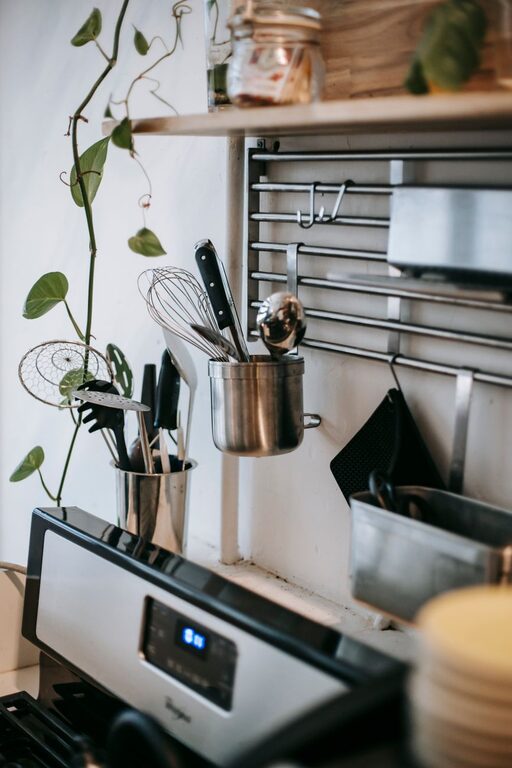
Choose utensils with hanging holes or compact shapes so they can be stored on a rail, in a narrow container, or inside a drawer organizer.
Make Cleanup Easier
Cleaning tools matter just as much as cooking tools in a small kitchen. A cluttered sink or limited drying area can make the room feel crowded quickly.
Useful cleanup items include:
– A compact dish rack
– A washable scrub brush
– Reusable cleaning cloths
– A small sink strainer
– A multipurpose surface cleaner
– A collapsible colander
A collapsible colander is especially useful because it can drain pasta and vegetables, then fold flat for storage. If you wash dishes by hand, choose a dish rack that fits your sink or rolls up over it.
Consider Space-Saving Appliances
Appliances should earn their counter space. Before purchasing one, think about whether it replaces another tool or supports meals you prepare regularly.
A compact toaster oven may replace a toaster and provide space for baking or reheating. An immersion blender can blend soups and sauces directly in a pot without requiring a full-size blender. A small electric kettle can heat water quickly while leaving the stovetop available for cooking.
Avoid buying appliances based only on convenience or appearance. Measure your available counter and cabinet space first, and check how each appliance will be stored when not in use.
Smart Storage for Small Kitchens
Good storage can make even a narrow kitchen feel more functional. Store frequently used tools where they are easiest to reach and place occasional items higher or farther back.
Try these ideas:
– Use drawer dividers for knives and utensils
– Install hooks for mugs, shears, or measuring cups
– Store pans vertically with a rack
– Nest mixing bowls and measuring cups
– Use the inside of cabinet doors for small items
– Keep a container for everyday utensils near the stove
– Store cutting boards in a narrow vertical gap
Do not overcrowd cabinets. Leave enough room to remove an item without taking everything else out. This small amount of space can make daily cooking much more convenient.
Build Your Collection Gradually
You do not need to buy every tool at once. Start with the basics: a chef’s knife, cutting board, skillet, saucepan, measuring tools, and a few utensils. Add other items when you notice a specific need.
Choose durable tools that are easy to clean and comfortable to use. In a small kitchen, every item should save time, support regular meals, or serve more than one purpose. With thoughtful choices and simple storage habits, limited space can become an advantage rather than a limitation.